A week in Lithuania, properly.
Two city personalities, one lake town, one deliberate slowdown and the Baltic coast. You will move enough to see the country change, but not so much that every breakfast happens beside an open suitcase.
This is the first trip I would give a friend.
Why it works: each stop changes the texture — baroque capital, lake-and-castle day, modernist Kaunas, then sand, pine, lagoon and Baltic weather.
What I leave out: Hill of Crosses, Druskininkai, Aukštaitija and a dozen good places. A first week is not a census.
Value for money: Excellent, with one warning: high-summer Nida is a different price universe.
Vilnius → Trakai → Kaunas → Klaipėda/Nida
Use public transport for the city corridor. Add a car only when it starts buying freedom rather than parking problems. The coast gets two nights because one rushed day is exactly how people conclude Nida is “pretty but expensive”.
Vilnius: land softly
Do not schedule five tickets for arrival day. Walk the Old Town, Cathedral area and one good viewpoint or Užupis. Eat properly. Let the country become legible.
Unscripted extra: if you arrive through VNO, the airport itself is part of the modern-Lithuania story after its 2025 terminal expansion and 2026 VNO Plaza opening.
Vilnius: choose depth over volume
One museum that fits you, one neighbourhood beyond the obvious, lunch that is not chosen by proximity to a souvenir shop, and enough empty time to discover why Vilnius works better when you stop “doing” it.
Trakai: castle, Karaite story, water
Make it a real half/full day: castle, Karaite history, kibinai, lake, then a boat or walk. Return for a relaxed evening rather than trying to bolt on another city.
Kaunas: change the visual language
Fast rail into modernism, Art Deco, Laisvės alėja, one strong lunch and whichever deeper layer suits you: Čiurlionis, military history, Mokslo sala, Pažaislis or sauna culture.
Kaunas morning → Baltic coast
Use the morning for Pažaislis, the reservoir or whatever you skipped. Then head west. Klaipėda is the gateway; Nida is the reason to slow down. If driving, this is where the car finally earns its keep.
Fun fact: Lithuania is compact enough that the official tourism board describes a theoretical west–east crossing in roughly six hours.
Nida & the Curonian Spit: give it a whole day
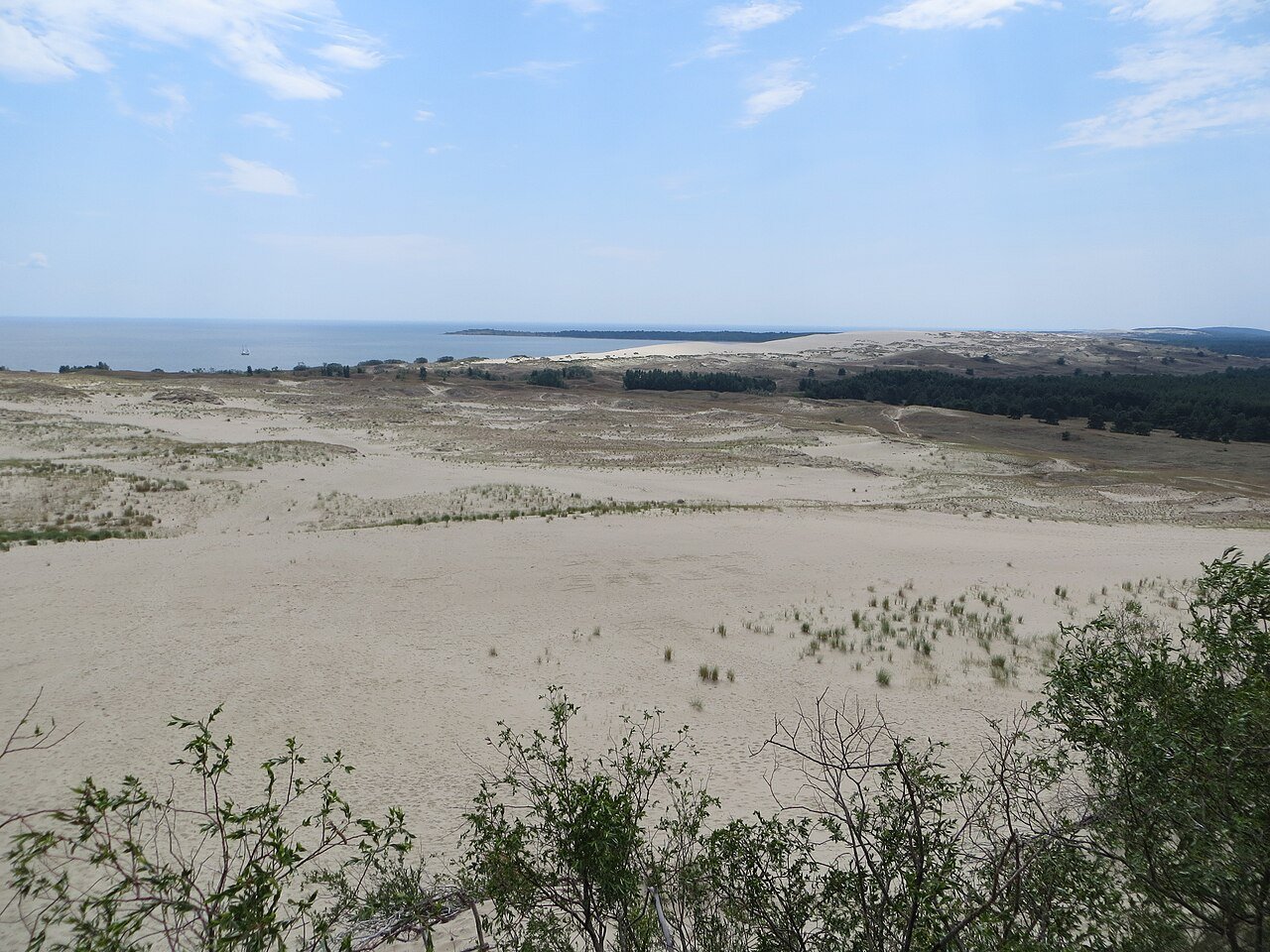
Dunes, lagoon, Baltic beach, pine forest, cycle paths, old fishermen's settlements and Thomas Mann. This is not a “sight”. It is a landscape. Rent bikes if the weather agrees; walk if it does not.
Open the full Nida & Curonian Spit guide →
Fun fact: the Curonian Spit is about 98 km long and roughly 400 m wide at its narrowest point — a strip of sand separating lagoon from sea.
One last coast morning, then back without heroics
Coffee, smoked fish or a final beach walk. Return toward Vilnius with enough buffer for real-world traffic, ferries and weather. If your flight is early, spend the last night on the mainland rather than gambling the holiday on a sunrise transfer.
Take home: smoked fish if practical, good linen/design, local food you actually tasted, or something from a museum/design shop. Avoid buying weight just because it has amber glued to it.
Vilnius 3 nights → Kaunas 1 night → coast 2 nights → final night according to departure. If you have only six nights, drop a city night, not the coast to one rushed afternoon.
Do not rent a car for seven days just because it is a road trip.
The best-value move can be hybrid: cities by rail, car only from Kaunas or Vilnius when you head toward countryside/coast. Fewer parking decisions, fewer rental days, same freedom where it matters.
Rail + feet + occasional taxi
Vilnius, Trakai and Kaunas do not reward having a car parked somewhere while you walk around them.
DefaultFor the city spine, public transport is not deprivation — it is efficiency. Save the car for the moment geography becomes interesting rather than using it to manufacture parking problems.
Car starts making sense
Coast timing, luggage, spontaneous stops and countryside detours are where the rental buys freedom rather than responsibility.
UsefulThis is where a car finally earns its keep: not between railway stations, but between a village, a lake, a roadside bakery and the place you did not know existed at breakfast.
Still possible
Rail to Klaipėda plus ferry/bus connections can work. It is less spontaneous but entirely reasonable if you dislike driving or want a city-and-coast trip without a car.
Plan connectionsCompletely viable, but timetable discipline replaces spontaneity. If that sounds calming rather than restrictive, do it. The coast is worth the extra choreography.
A realistic week, before flights.
Broad planning ranges only. Accommodation and the Curonian Spit in July/August are the biggest variables.
Simple stays, rail/public transport, casual food, selective admissions and a disciplined coast booking. Still a proper holiday.
Comfortable rooms, a few very good meals, admissions/experiences, targeted taxis and 2–3 rental-car days or equivalent transfers.
Boutique stays, premium dining, private boat/sauna or a day with local company, and paying to remove friction. Summer Nida can push this further.
A better room at the coast, one excellent dinner, one water/sauna/local-company experience and transport that saves a bad half-day. What I would not spend extra on: a car sitting in central Vilnius for three days.
Same country. Different week.
The route still works outside summer, but the balance changes.
Water becomes part of the itinerary.
Boats, bikes, lake time, long evenings, Pažaislis events and the coast all make more sense. Book Nida early in peak summer.
Forest season can steal the show.
If mushrooms, colour and quieter roads appeal more than beach weather, consider replacing one coast night with Dzūkija or a countryside stay.
Use cities, culture, sauna and food.
Keep the coast only if you like wind, emptiness and atmosphere. Add museums, Art Deco, concerts, spas and longer dinners.
Pack flexibility.
Lithuanian spring can behave like several seasons in one day. It is a good month for cities and food, less reliable for building the whole trip around water.
The stories that make the week stick.
Objects are useful. Stories are what you retell when you get home.
Three capitals, three very different jobs.
Vilnius is the historic and current capital; Trakai carries the medieval Grand Duchy story; Kaunas became Lithuania's temporary capital in the interwar period. Seeing all three gives the week a narrative spine.
Kaunas is not “less old Vilnius”.
Its strongest visual argument is modernism. That is why rushing there only for the medieval castle misses the city almost completely.
The cuisine changes when geography changes.
Karaite kibinai in Trakai, contemporary Lithuanian cooking in the cities, and smoked fish toward the coast tell a better story than eating cepelinai seven times to prove commitment.
The coast is two waters at once.
On the Curonian Spit, the Baltic Sea sits on one side and the lagoon on the other. That narrow geography is why a bike ride can feel like several different landscapes in one afternoon.
Route logic checked for 2026.
Official sources checked on 26 August 2026. Exact train/ferry times and provider prices should be re-checked for your travel dates.
A week is the sweet spot, and it is the point at which Lithuania stops being a city break with excursions and becomes an actual country. Seven days buys you a capital, a second city with an entirely different personality, two nights on the coast and a night in the forest with the phone in a drawer. Any more and you should be adding Latvia. Any less and you are choosing what to sacrifice.
SHAPE: Vilnius 3 · Kaunas 1 · Nida 2 · sodyba 1 · VERDICT: the length I would book if it were my week
The whole route is free. Your version can be personal.
Use this exactly as written if it fits. If you are travelling with children, parents, mobility limits, Lithuanian roots, a food obsession, a concert date or a generous budget you do not want to waste, I can reshape the week around those priorities.
How the help works →DIY
Completely realistic. Book directly and keep control.
With Vytas
Buy back research time, add local context, or have company for the part where a human makes the experience better.
FROM THIS PAGE TO THE WHOLE TRIP
One page solves one decision. The Handbook connects the trip.
Twenty chapters join the days, bases, transport, food, destinations and things worth skipping into one offline plan. If you would rather not assemble it yourself, Trip Build applies the same judgement to your dates.
Trip Build and €99 support both include the complete Handbook at no extra cost.