Independent Lithuania field guideinfo@lithuaniaunscripted.com
Your base:Vilnius
Vilnius base · advice adapts

FOLLOW THE NEMUNAS · DESK VERIFIED

Raudondvaris had a count who became a Chinese mandarin.
Lunch is in the orangery.

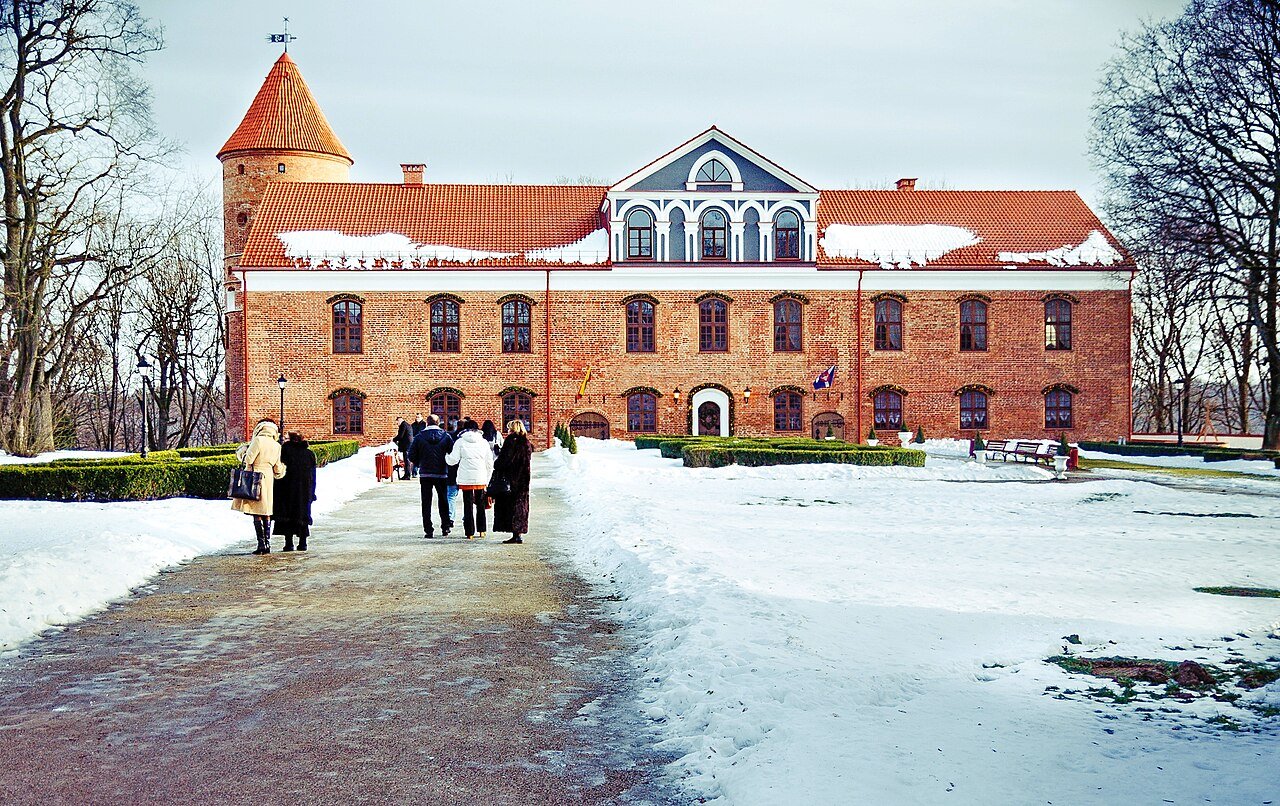
Nine kilometres from Kaunas, one red-brick manor manages to contain Renaissance architecture, a world-travelling photographer-count, exotic collections, citrus history and a restaurant that lets you stay inside the story.

Raudondvaris Manor near Kaunas

Follow the Nemunas · 9 chapters

Small Lithuania, properly.

Not nine attractions to collect. Nine reasons to slow the road down — with food, river, history and enough context to know what deserves your time.

Why this is more than a manor stop

The Tiškevičiai did not collect minimalism.

Raudondvaris is a 17th-century Renaissance manor ensemble only about nine kilometres from Kaunas. Under the Tiškevičiai it became a wealthy residence with art, rare books, exotic plants and animals. The restored complex now includes the museum, park, arts spaces and a restaurant inside the old orangery.

The count you remember

Benediktas Henrikas Tiškevičius: traveller, photographer, collector — and, in China, a mandarin.

He travelled widely through Africa and Asia, became internationally known for photography, filled Raudondvaris with objects and images from his journeys, and the manor’s own history records that he received a mandarin title while travelling in China.

The mansion had Persian and Arabian rooms because apparently a normal sitting room lacked ambition.

The collections included major art, books and travel material. The orangery held citrus and other exotic plants. A current heritage programme even builds a tasting around the Tiškevičius orange-soup story.

A Lithuanian count, an American wife, a French companion, Chinese-language ability and oranges growing beside the Nevėžis. “Provincial manor” is doing some heroic understatement here.
Eat the place, not just beside it

Raudondvario dvaro oranžerija.

The restaurant occupies the restored orangery, so lunch belongs to the site rather than interrupting it. The current online menu mixes contemporary European restaurant dishes with a separate manor-themed menu that deliberately references the Tiškevičius travel and citrus stories.

Vytas’ note

This is the kind of heritage stop that becomes substantially better when you do not leave to eat in a retail park. Walk first, then sit down. The meal gives the manor a second act.

Check the current restaurant menu →

The 3-hour version

Manor → park → story → lunch.

01 · Start inside

Use the museum to meet the Tiškevičiai before you try to understand the buildings as scenery.

02 · Walk the ensemble

Castle, tower, park, orangery, stables and ice house make sense as one estate rather than separate pins.

03 · Let lunch be long

Raudondvaris is close enough to Kaunas that there is no logistical prize for eating quickly.

Sources & checks

History is funnier when it is true.

Trust rule: historical and practical claims are desk-verified unless a dated field-check badge says otherwise. Restaurant menus, ferry operation and opening hours can change; use the primary source before travelling.

VYTAS’ VERDICT

Raudondvaris is the easiest place on this route to underestimate because it is so close to Kaunas. Do not make that mistake. The building is good; the Tiškevičius story is better; the orangery lunch is what turns the stop from “saw a manor” into an afternoon with a plot.

Worth the detour9/10
Tourist-trap risk2/10
Food + history fit10/10
Bad-weather proof8/10

FROM KAUNAS: ~9 km · TIME: 2–4 h · EAT: in the orangery

FROM THIS PAGE TO THE WHOLE TRIP

One page solves one decision. The Handbook connects the trip.

Twenty chapters join the days, bases, transport, food, destinations and things worth skipping into one offline plan. If you would rather not assemble it yourself, Trip Build applies the same judgement to your dates.

Trip Build and €99 support both include the complete Handbook at no extra cost.