Independent Lithuania field guideinfo@lithuaniaunscripted.com
Your base:Vilnius
Vilnius base · advice adapts
Social history · 1852 to now

The address survived the Tsar. Konradas survived the war.
Tulpė survived the Soviet Union. The free market finished the job.

A hundred and fifty-one years at one address on Laisvės alėja, and what happened around it: the café you attended in order to be considered a writer, a Soviet doorman who decided whether you were dressed well enough to come in, and a van behind the market selling potato pancakes at four in the morning.

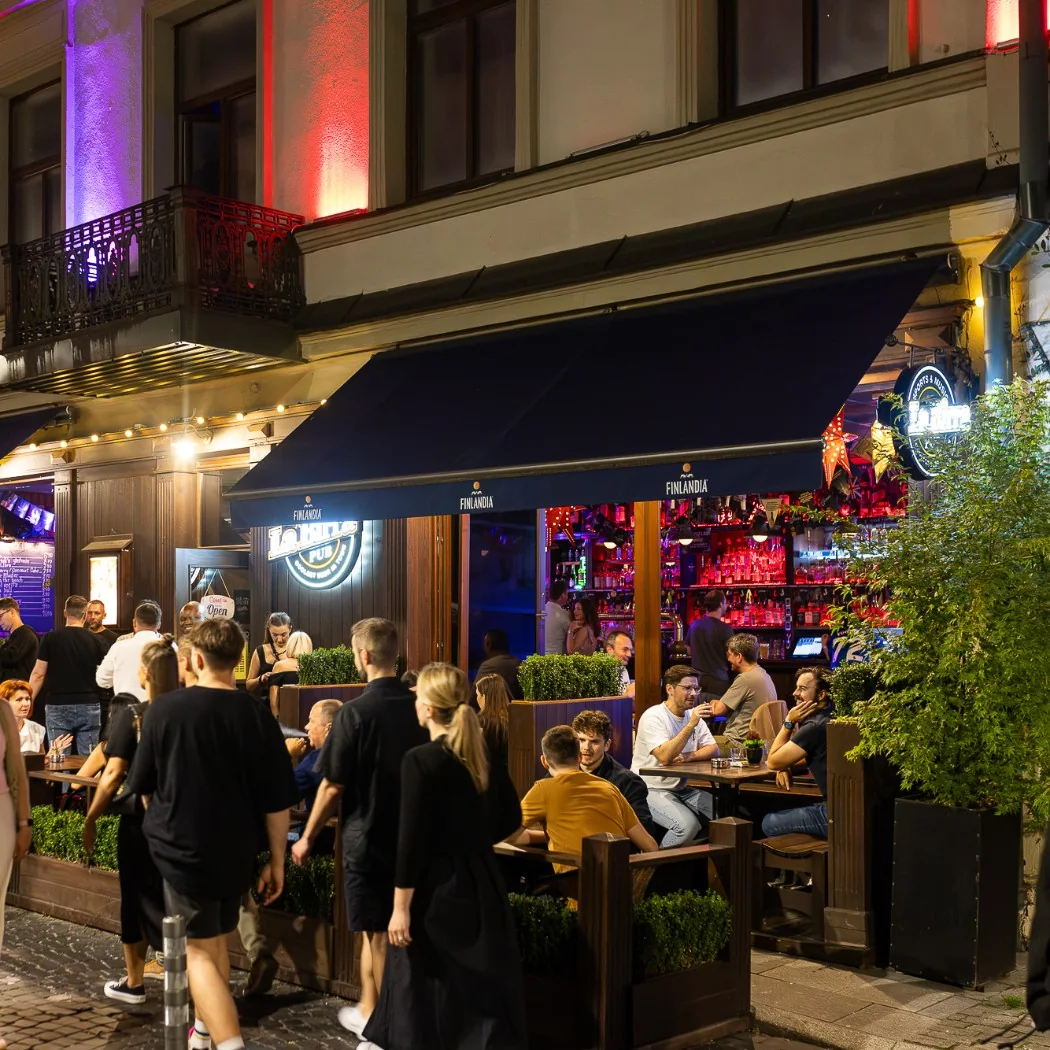
Busy bar terrace on Vilniaus Street in Vilnius at night
Vilnius after dark: the centre works because the evening can change character within a few streets.
01 · The premise

Every occupation closed the bars. None of them closed the drinking.

You can read the political history of this country in its licensing. Independence opened cafés. Occupation closed them, renamed them, or filled them with informers. The next occupation did the same with different paperwork. And through all of it people kept finding rooms to sit in, because that is what people do.

What makes the Lithuanian version unusual is how completely the physical evidence has been erased. The famous interwar Kaunas café interiors this story depends on are gone as working rooms. You can find photographs and objects; you cannot simply sit down in Konradas as it was. At Laisvės alėja 45, a confectionery-and-café tradition stretched from 1852 to 2003 through several names, owners and regimes, and there is now no sign on the building explaining what the address once meant.

What follows is where Lithuanians actually went at night, from 1852 to last Friday. Some of it is funny. One part of it is not, and I will tell you when we get there.

02 · Interwar Kaunas

The café you went to in order to be seen as a writer.

A German baker’s confectionery opened at Laisvės alėja 45 in 1852. It became something else entirely in the 1920s, when Richard Konrad’s heirs — the brothers Maksas and Leonidas — took it over and it became the Konradas café. Kaunas was the temporary capital by then, a provincial fortress town suddenly required to behave like a European seat of government, and it responded the way such places do: it grew cafés.

Konradas, on Laisvės alėja 45, became the one that mattered. Contemporaries compared it to the Café de la Rotonde in Paris, which tells you more about Kaunas’s ambitions than about the coffee. Venclova sat there. So did Binkis, Sruoga and Herbačiauskas. And in the 1930s the newspaper Diena printed the sentence that explains the entire institution:

If you want to be considered a writer, a poet, an artist or a journalist, go to Konradas every day and sit there for several hours among the proprietors of that reputation.

That is not a description of a café. That is a description of a professional requirement. Across the street, the Metropolis competed for the same crowd with a rival orchestra, because in interwar Kaunas the war between restaurants was fought with musicians.

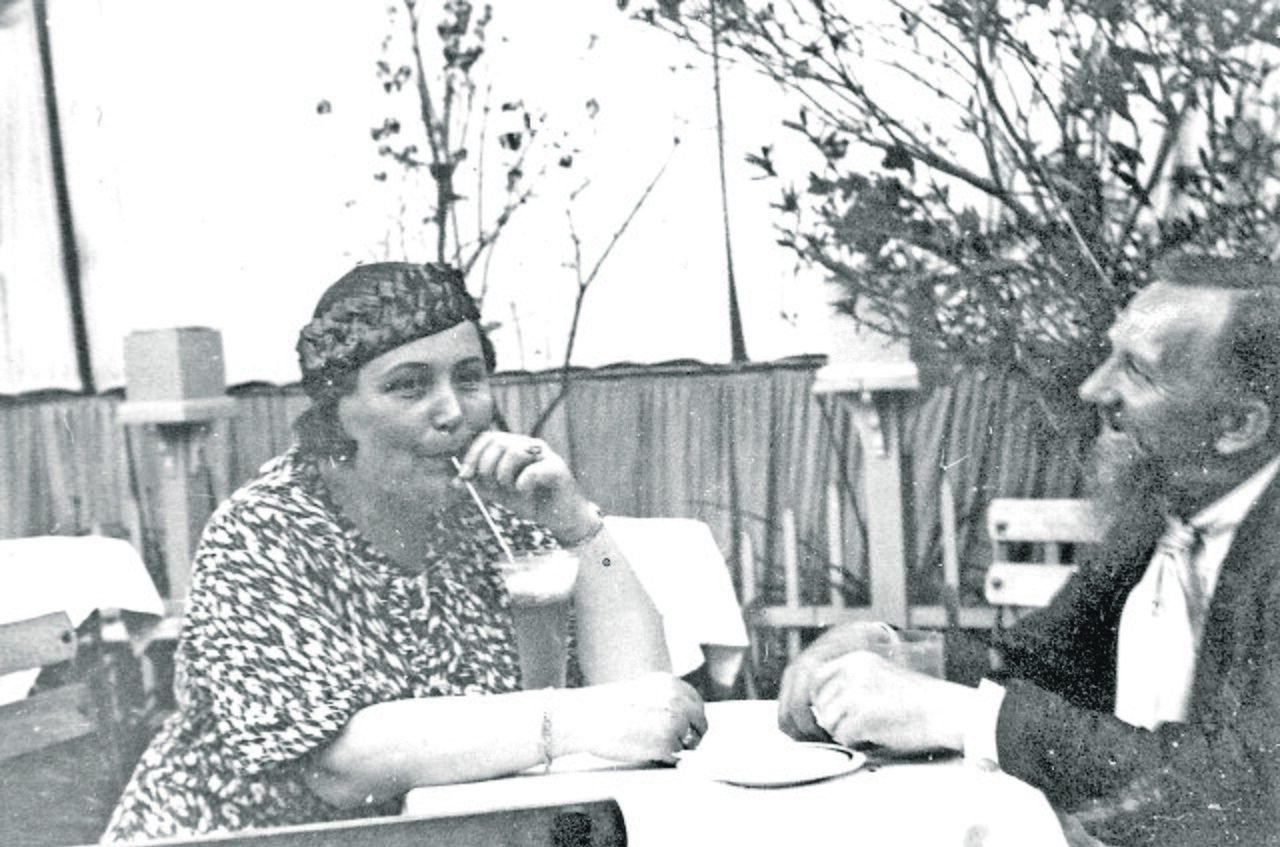
Liudas Gira and his wife seated in Konradas Cafe in Kaunas in 1930
HISTORICAL · KAUNAS · 1930. Liudas Gira and his wife at Konradas. The point was never only coffee: the room itself was part of cultural life.
Unknown photographer · Maironio Lithuanian Literature Museum (source) · Public domain
03 · 1948

The café stayed open. The name did not.

Here is the detail that makes the Soviet period legible in one move. They did not close Konradas. They renamed it.

In 1948 it became Tulpė — the Tulip. Same room, same tables, same city, and a name with no German in it and no owner attached. The Konradas name had been kept as a brand even after the family stopped owning the place; it took a change of empire to remove it.

Tulpė then had its own decades of fame, its own bohemian crowd, its own rivalry with the Metropolis. Bronius Pundzius made a sculpture for its interior. And when independence came back, Tulpė lasted about a decade and closed in 2003 — defeated not by a regime but by rent. The sculpture is in the Čiurlionis museum in Kaunas. The address became a clothes shop, and there is no plaque.

Nothing about that is unusual for this country. It is only unusual that a building can hold that much and say nothing about it.

04 · Soviet Vilnius

A doorman who decided whether you were dressed well enough.

Vilnius got its own institution on 6 November 1959, when a café called Neringa opened at what was then Stalin Avenue and is now Gedimino, in the shell of the old Viktorija hotel. The Nasvytis brothers designed it, and the opening was not a local event — news of it reached Moscow. Nothing quite like it existed anywhere else in the Soviet Union.

Getting in was the point. There was a dress code and it was enforced by a doorman who genuinely decided who came in: no trousers on women, jeans out of the question, hair combed, appearance tidy. One published memoir of the café goes further and recalls that bare legs were not permitted and that the doormen checked. I have found that account in one source only, so treat it as memory rather than record — but nobody disputes that the door was the hardest part of the evening.

One memoir puts the difficulty plainly: it was hard to get in, especially if you were young, not rich, and a woman. What went on inside was a stratified little society running from the professors’ table down through young painters and students. People described it not as a café but as a promise that a different kind of life was possible somewhere.

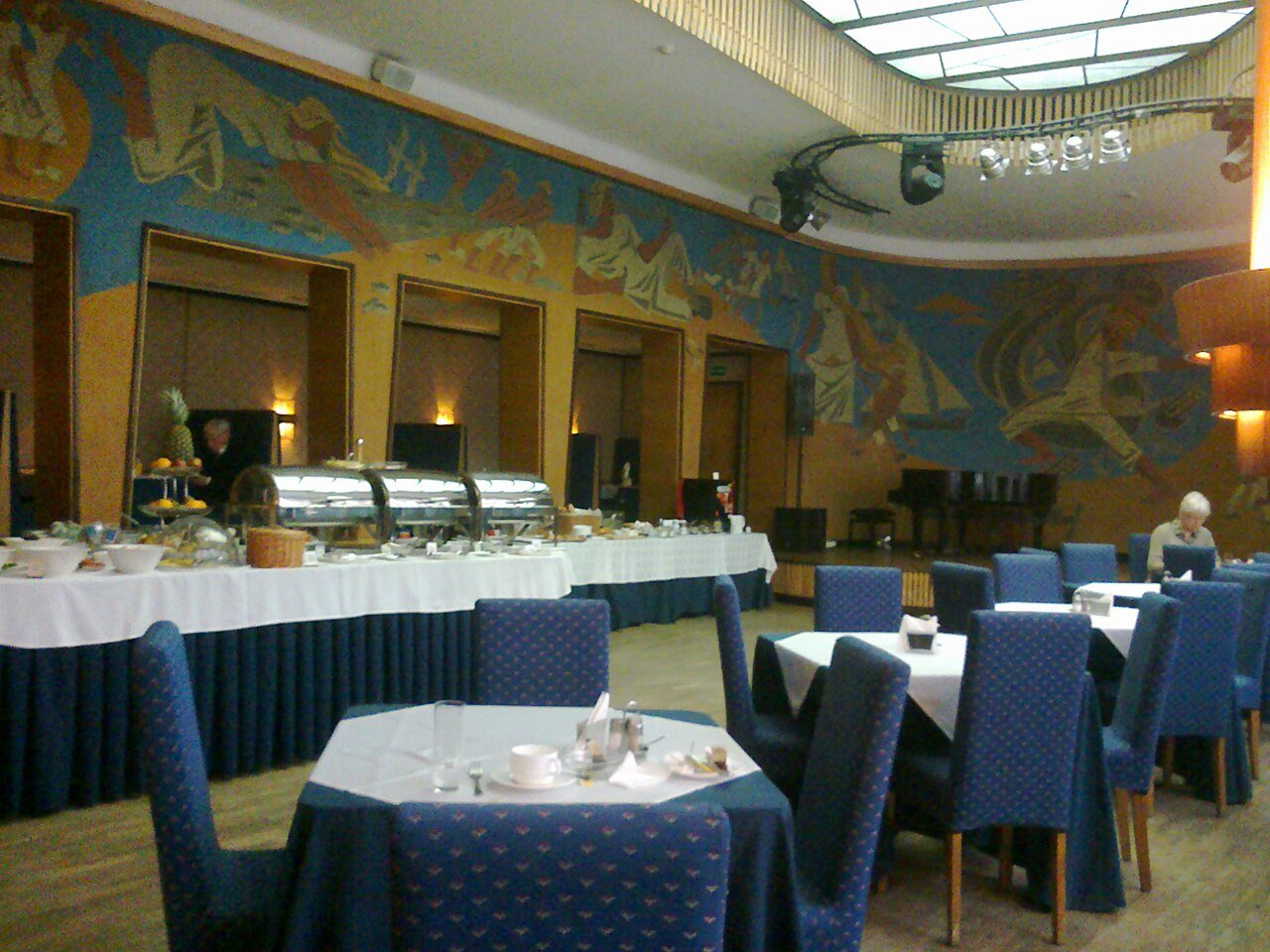
Neringa is still there. We will come back to that, because it turns out to be the point of the whole page.

Neringa restaurant interior in Vilnius, photographed in 2013
NERINGA · photographed 2013. A later photograph of the protected 1959 interior — not a 1959 archive image. The room has since been restored; its cultural-heritage identity is the fixed point.
Kaihsu Tai · CC BY-SA 3.0
05 · The Soviet night

Four rooms, and what it took to get into each.

The Soviet period did not lack nightlife. It rationed it, and the ration queue was social.

Dainava — the four a.m. bar

Opened 1963; from 1967 its cocktail bar ran until four in the morning. That made it one of the first night bars in the Soviet Union, which is a sentence worth reading twice. Getting in was difficult and a large share of the clientele were foreigners, which was of course entirely a coincidence and not at all a design feature.

Hotel Lietuva, 22nd floor

Described by one musician as a republic within a republic. Getting a table was, in his words, like asking God for a favour. And once you had it, you knew perfectly well you were being watched by what he calls our lovely security service. People went anyway. That is the part outsiders find hard to hold in their heads: everyone knew, and everyone went.

Suokalbis — the writers’ room

The Writers’ Union café. Semi-closed, barely advertised, and after midnight you got in only if you knew somebody in the arts. One first-time visitor’s description is the best sentence in the entire history of Lithuanian nightlife: the company gathered here clearly knows that tomorrow is the end of the world, and they were enjoying themselves as if it were the last time.

Open official details ↗

Tauro ragas — where everyone else went

For the great majority who were not writers, architects or hard currency, there was the beer hall. The Aurochs’ Horn was the city’s main watering hole, and its social gatekeeping was a different species from Neringa’s.

06 · The nineties

DJs were as important as priests, and nobody was joking much.

Then the empire fell over and the country got everything at once: freedom, kiosks, raves, racketeers and a currency that changed twice. The first clubs proper — Eldorado, Nasa — opened in 1994. Studija and Amicus drew the crowds and, by every account, drew the mafia and the celebrities in roughly equal measure.

Tomas Augulis, who was DJing then, describes the period better than any historian has:

I joke that DJs back then were as important as priests in churches. Whatever we said from the stage became the new norm. Only we weren’t delivering the word of God.

There is one thing about that decade a visitor will not work out unaided, and it is not funny. The clubs split by language. The disco at the Builders’ Palace in Naujamiestis, then a heavily Russian-speaking district, drew almost no Lithuanians. The ones out in Saulėtekis were almost exclusively Lithuanian. Each then programmed harder towards its own crowd, and the gap widened on its own. Two cities, one map, different Fridays.

That has largely dissolved, and the generation now filling the same rooms grew up without it. It is still worth knowing it existed. My own view, and it is only that: it explains a reflex I sometimes notice in people my age, who learned early which room they were in before deciding which language to order in.
07 · 2001

The year dance music got a business plan.

The turning point was late 2001, when Gravity opened in Vilnius: the first club here built to full European standards, and the first to charge what was then a shocking twenty-five litas at the door. The number caused genuine outrage. It also worked.

After that the floodgates: Helios, Intro, Terminalas, New Orleans, Galaxy, Reset, Mambo in Vilnius; Exit and City Metro in Kaunas; Dada and later Global in Klaipėda. Dance music stopped being a subculture and became an industry with rent to pay.

And then the industry did what industries do. The great clubs of the nineties, the ones that pulled in gangsters and pop stars, are now — and I want to be clear that this is literally true — libraries. A generation partied in buildings that are now full of people reading quietly. There is no better summary of what happened to this country between 1994 and now.

08 · 2026

What actually happens here on a Friday.

Clubs are event-led, not addresses you collect

The serious programme still clusters around Thursday to Saturday, but in 2026 the useful rule is to check the night, not worship an old club name. Permanent rooms matter less than the programme they are actually running this weekend.

The DJ-temple era is over

Electronic music is still strong, but the scene is spread across clubs, converted industrial rooms, concerts and one-off programmes. Kaunas is even more event-led: festivals and temporary spaces often matter more than one permanent room.

The beer is still a better story than another mojito

Lithuania has an unusually alive farmhouse-beer tradition alongside a modern craft scene. If you want one specifically Lithuanian rabbit hole, ask for keptinis — baked-malt farmhouse beer — rather than assuming the imported cocktail list is the local experience.

Prices, honestly

For Vilnius in 2026, plan roughly €5–9 for a beer, €10–15 for a serious cocktail and €10–25 for a club ticket, with special events higher. It is still good value against London, but it is no longer the €3-beer capital preserved in somebody’s 2019 blog post.

Where to go when the market closes

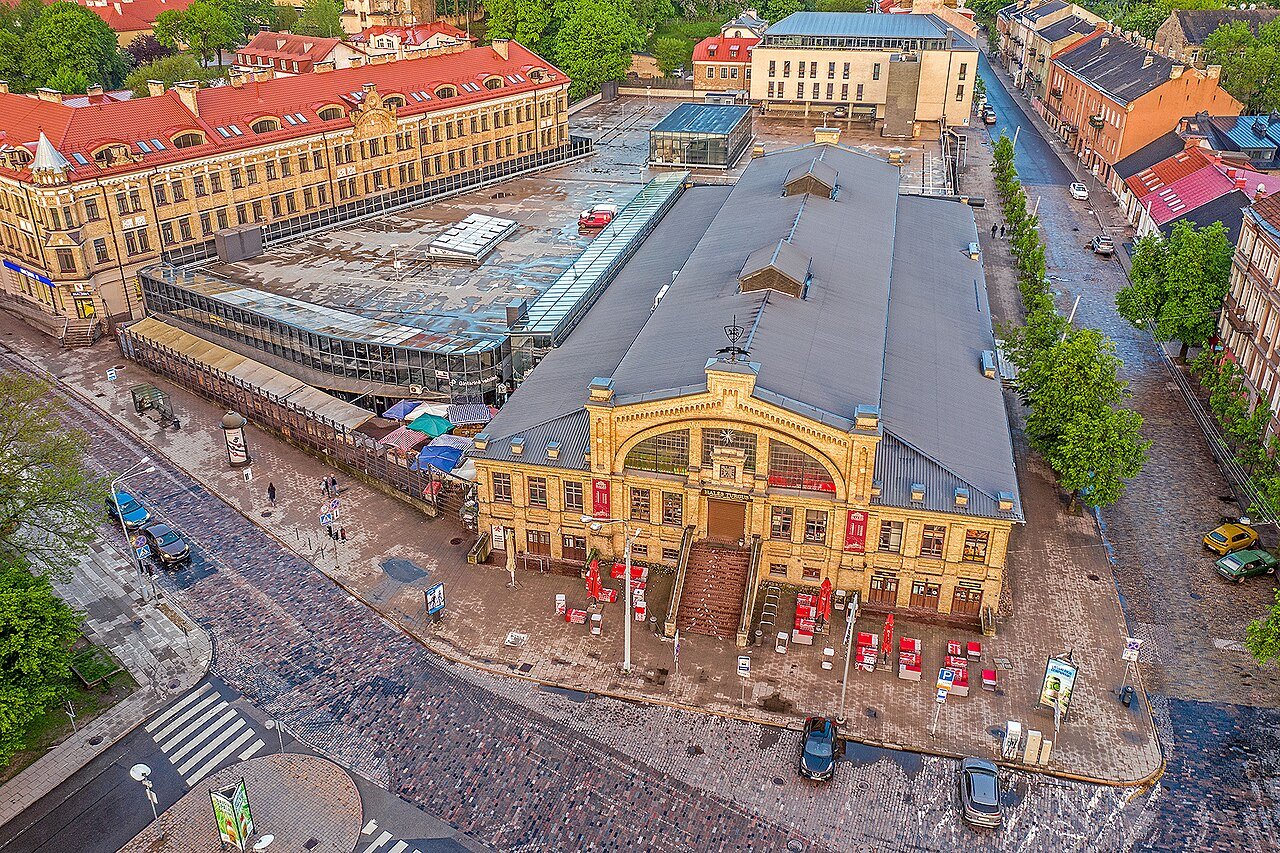
The Halė / station side of Vilnius changes character after the food stalls shut: bars, courtyards and event spaces keep the area alive. Treat any 03:40 food promise as a live check, not folklore — kitchens and vendors change faster than the district does.

Read the full guide →

The door

Door staff can still say no, especially at capacity, but the old ritual of a doorman deciding whether your clothes were respectable enough is no longer the point of the evening.

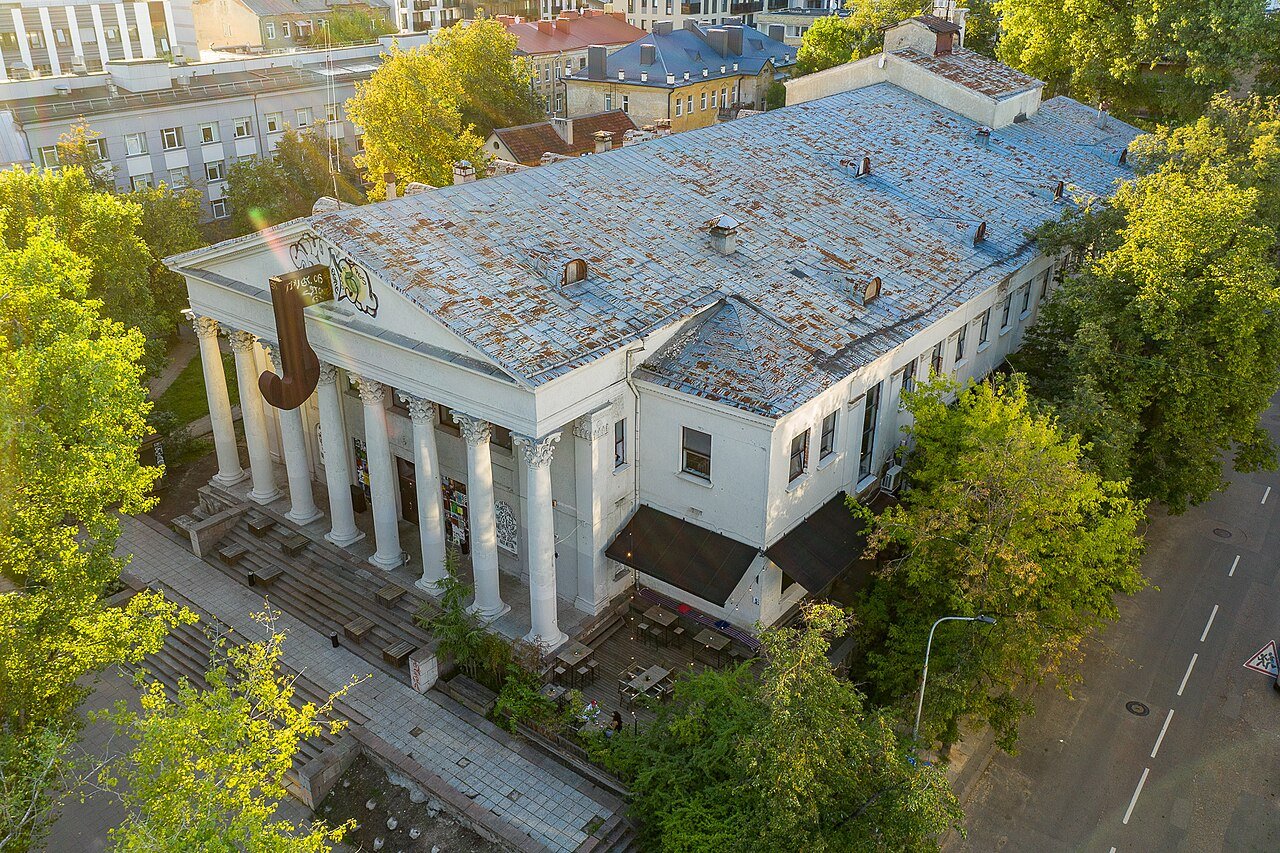
Kablys cultural and nightlife venue in Vilnius, photographed from above in 2023
VILNIUS · KABLYS · photographed 2023. A Soviet-era railway workers’ palace turned alternative-culture and nightlife anchor. The programme changes; the building is the fixed point.
Augustas Didžgalvis · CC BY-SA 4.0
08b · Tonight, practically

Pick by mood, not by a Top 10 list.

Go Vilnius now treats the night as its own product — the official Vilnius Night Pass costs €15, is valid for three nights from 18:00 to 06:00 each night, and includes offers from more than 25 partners. The city also publishes a nightlife triangle around Vilniaus, Islandijos and Vokiečių streets. Start with the district and the programme; let the venue name come second.

Cocktails, quietly

Old Town and the streets around Vokiečių are the useful zone. Go before eleven if you want a conversation; later, choose by the room you can actually see rather than by an old ranking.

Live music

Vilnius and Kaunas are both stronger when the evening is built around an actual programme: band, jazz set, alternative show or one-off cultural night. Check the date. A famous room with nothing happening is still just a room.

Electronic music

The scene is more event-led than it used to be. That matters because a five-year-old “best clubs” article can now be wrong in the time it takes to rank on Google. Use the Vilnius Night Bureau or the venue’s current programme, not memory.

LGBTQ+ nights

The capital has a real queer nightlife layer, but recurring nights and programmes matter as much as permanent labels. Check what is actually on that week; the calendar tells you more than a generic category.

Cabaret and burlesque

Ticketed adult performance exists and sits closer to theatre than to a strip-club directory: cabaret, drag, circus, dance and burlesque. Book the show you want, not the phrase “adult entertainment”.

Getting home

Do not assume public transport dies at 23:00. Vilnius has nine night-bus routes: N8 runs daily, while the others cover weekend nights, with last departures from the centre around 04:00. Check JUDU first; Bolt is the universal fallback, especially midweek or away from a night route.

Venue pulse · checked 3 Sep 2026

This is the only block on the page intended to age quickly. Re-check it quarterly. As of this check, the current Vilnius Night Bureau programme lists Anna Mesha. Butas, Cornercafé, Elastica and Gallery 1986 together in the 5 September “Vilniaus naktys” club programme; SOHO CLUB has current September events; Nijinsky III has current cabaret programming. Opium is deliberately absent: it closed in February 2026.

Next scheduled editorial check: December 2026. A venue disappearing from this paragraph is not a judgement; it usually means the programme or business changed.

Halės Market in Vilnius, photographed from above in 2021
HALĖ · photographed 2021. Daytime market, night-time social geography. Treat the building as the anchor and check the current bars, kitchens and programme before you go.
Augustas Didžgalvis · CC BY-SA 4.0
08c · Adults only, without pretending

Where this site stops, and why.

Strip clubs and adult venues exist in Vilnius and are not hard to find without my help. What you will not get here is a directory, a recommendation or a rating, and the reason is not squeamishness.

Paying for sexual services is an administrative offence in Lithuania — for the buyer as well as the seller — and organising it is a criminal one. A site that guides visitors toward that is doing something other than travel writing. Beyond the law, there is the plainer point: this site exists because nobody can buy a good verdict on it. That is worth more than the traffic a stag-party page would bring, and the two cannot live at the same address.

So: cocktails, bands, techno, cabaret, a lake at four in the morning if you insist. All of it covered honestly. The rest is not a gap in the guide. It is the edge of it.

08d · The line is closer than you think

Alcohol, drugs and what Lithuanian law actually does.

This section exists so that nobody is surprised. It is not a buying guide, a dosage guide or a police-avoidance guide. The useful part is knowing where the line sits before Friday night, not after it.

The Sunday surprise

The drinking age is 20. Retail alcohol sales are normally 10:00–20:00 Monday to Saturday and 10:00–15:00 on Sunday. If a seller doubts that you are 25, they must ask for ID; without it, the sale has to stop. Delivery does not create a loophole — the same age and time rules still apply.

The trend is down, not gone

In 2024 Lithuania recorded 10.2 litres of legal pure alcohol per resident aged 15+, down from 11.0 in 2023 and the lowest level in a decade. That is a real change, not proof that the country suddenly became sober.

The survey and the sewer disagree usefully

A representative 2024 adult survey found 4% had used cannabis in the previous year and 1% had used other drugs such as cocaine, MDMA, LSD or amphetamine. A targeted Vilnius nightlife survey is much noisier: 57% reported overdoing alcohol in the previous year and 28.1% reported using different illegal psychoactive substances at the same time. That sample is nightlife, not Lithuania. A club queue is not a census.

The sewer does not answer questionnaires

Wastewater adds another angle. In 2025 cocaine residues were highest in Kaunas among the three Lithuanian cities measured and increased at weekends; Kaunas also entered the European top 20 for methamphetamine residues. Wastewater cannot tell you how many people used a drug or who they were. It can tell you that “nobody does that here” is not a serious description of the city.

The important word is criminal

Lithuania has not decriminalised small personal possession. Criminal Code Article 259 still treats a small amount without intent to distribute as a criminal misdemeanour, not an ordinary administrative ticket. Do not turn an online quantity table into a personal legal allowance: classification depends on the substance, amount and circumstances of the case.

The courts still require proof

Criminal law is strict, not automatic. Lithuanian Supreme Court practice stresses that courts still have to establish the relevant facts and state of mind; a laboratory result is not a substitute for proving the case. That is a rule of evidence, not a traveller’s loophole. Distribution is a different and much more serious category under Article 260.

Forum reality, correctly weighted

Reddit is useful for atmosphere. It is terrible legislation.

Recent 2026 Vilnius threads repeatedly show the same surprises: visitors assume the drinking age is 18, discover that it is 20, and are told to check current Facebook / Resident Advisor / venue programmes because the electronic scene is now event-led. The same forums also produce confident legal folklore. Use community posts to learn whether a room feels alive; use official sources for the law.

If somebody needs help, get help

  • I will not tell you where to buy, what dose to take or how to beat a test. That crosses the line from travel guidance into facilitating the thing itself.
  • Do not drive after alcohol or other psychoactive substances. The sensible plan is public transport or a ride home, not arithmetic.
  • Avoid mixing substances. Combining alcohol with other depressants or stimulants makes effects and medical risk less predictable.
  • If somebody collapses, has a seizure, abnormal breathing, chest pain, severe overheating or profound confusion, call 112. Tell emergency staff what may have been taken. Criminal Code Article 259(3) contains a specific exemption from criminal liability for the used substances when a person voluntarily seeks medical help; it is not blanket immunity from everything that happened that night. Fear of the law is still a terrible reason to delay an ambulance.
  • Look for “Čia – saugiau” / “Safer here”. As of August 2026, 42 Vilnius nightlife venues had signed the city safety memorandum and the first 15 had received the marker for implementing staff training, incident-response, harm-reduction and sexual-violence-prevention measures. The sign is preparedness, not a guarantee that nothing can happen.
09 · The point

One room survived, and it is not the one you would expect.

Here is the arithmetic of this page. Interwar Kaunas had a café culture serious enough to be compared to Paris. Of it, nothing survives — no authentic interior, no working room, no plaque. The buildings are shops.

The Soviet period built its own, under conditions nobody would choose, with doormen and dress codes and a security service at the next table. And from that period, one interior survives on the cultural heritage register and still opens its doors every day: Neringa, on Gedimino, where the Nasvytis brothers put it in 1959.

So one of the rare places where you can still sit inside a protected room that carried the last generation’s social life is a café built under occupation. That is not a comfortable sentence and I am not going to soften it. Go anyway. Order something, look at the ceiling, and consider that the people at these tables in 1962 believed almost none of this would ever be theirs.

Then walk out, get a beer somewhere with no dress code at all, and appreciate the difference more than you otherwise would have.

10 · The cheat sheet

If you go out here exactly once.

Hacks that earn their place

  • Thursday to Saturday, or don’t bother. A Tuesday night out in Vilnius is a quiet drink with three other people, and they all know each other.
  • Start late. Bars fill around eleven, clubs after midnight, peak near three. Arriving at nine means watching staff set up.
  • Drink the local beer, not the cocktail list. The craft scene here is the best in the Baltics and the farmhouse styles do not exist anywhere else. Ask for keptinis.
  • Book the event, not the whole evening. Walk-in bars reward spontaneity; club nights, cabaret and headline shows may need a ticket. The central nightlife triangle is compact enough to move between stops on foot.
  • Sit in Neringa before you go out, not after. It is a café and a museum at the same time, and it does not work at two in the morning.
  • Halė after dark is real; the 03:40 menu is not guaranteed. The market has night bars and DJs, but check the current kitchen or vendor hours before building your rescue meal around folklore.
  • Check JUDU before Bolt. Weekend night buses run through the small hours; Bolt remains the simple fallback when the route or day does not work.
  • Don’t come here to recreate the Baltic stag tourism of the 2000s. Riga and Tallinn have already demonstrated what that does to a city’s nightlife reputation. Lithuania has quietly declined to repeat it, and you will have a better night going along with that.
VYTAS’ VERDICT

Go out here, but go out like a local rather than like a tourist, which in practice means later, cheaper and with beer. Lithuania has never had a golden age of nightlife it can point at, because each one was demolished by whoever arrived next — and what it has instead is a scene with no pretensions, no dress code and no interest in impressing you. After decades in which the door itself could be part of the hierarchy, that is not a lack of ambition. That is the achievement.

Worth a night out8/10
Tourist-trap risk3/10
Value for money10/10
Works midweek3/10

NIGHTS: Thu–Sat · PEAK: around 03:00 · BEER: roughly €5–9 · ENTRY: often €10–25 · VERDICT: strong value for a European capital, and the best nights are built around the programme rather than a famous door

Next

The daytime version of the same city.

Kaunas is where the café culture happened and where the modernism still stands. Vilnius is where the surviving room is. And if you want to know what a night out actually costs against everything else, the cost page has the numbers.

VILNIUS · EAT + DRINK + WALK

The Old Town is part of dinner.

Our new Vilnius food-and-drink route joins the current Michelin scene, PACAI, Stikliai and the cocktail bars to the streets between them — plus the live event calendar.

Eat the Old Town properly →

FROM THIS PAGE TO THE WHOLE TRIP

One page solves one decision. The Handbook connects the trip.

Twenty chapters join the days, bases, transport, food, destinations and things worth skipping into one offline plan. If you would rather not assemble it yourself, Trip Build applies the same judgement to your dates.

Trip Build and €99 support both include the complete Handbook at no extra cost.